
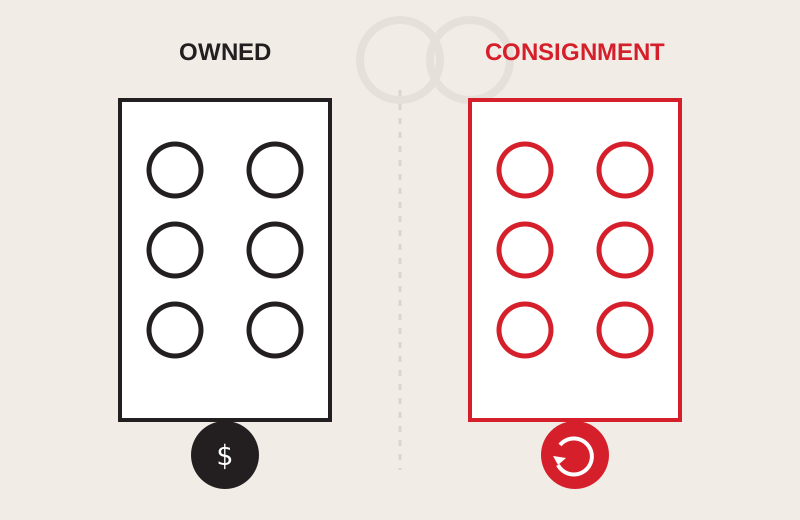
Clinics ask us this constantly: should we own our frame inventory outright, or bring in a consignment program? There's no universal right answer, but there is a clear set of tradeoffs.
Owning inventory
When your clinic purchases frames outright, you control full margin on every sale and have complete flexibility over styling and pricing. The tradeoff is upfront cost, the risk of slow-moving styles sitting in a case, and the staff time required to track and reorder stock.
Consignment
With a consignment program, frames arrive at no upfront cost, and your clinic pays only as patients select and purchase them. Underperforming styles can rotate out without your clinic absorbing the loss. The tradeoff is typically a smaller margin per unit compared to owning inventory outright, since the vendor is carrying the inventory risk.
A rough way to think about it
- Lower, less predictable patient volume: consignment usually makes more sense — you avoid tying up budget in inventory that might not move.
- High, steady patient volume with dedicated optical staff: owning inventory can produce better margins if you have the staff time to manage it well.
- Limited clinic budget for upfront purchasing: consignment removes that barrier entirely.
- Just starting or expanding an optical department: consignment lets you learn what your patient population actually wants before committing budget to a permanent frame inventory.
They're not mutually exclusive
Some clinics run a hybrid model — a small owned inventory of core styles, supplemented by a rotating consignment board for variety. If you're not sure which fits, walking through your last 12 months of patient volume and current frame turnover is usually enough to make the decision clear.