
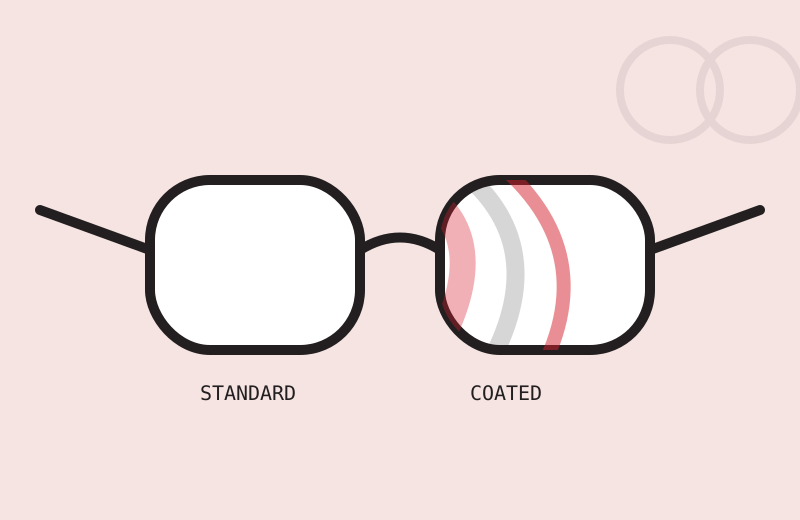
Coatings are where a lot of optical value gets lost — not because the coating doesn't work, but because patients don't understand what they're paying for and end up skipping it, or picking one that doesn't match how they actually use their glasses.
Anti-reflective (AR) coating
AR coating cuts glare from screens, headlights, and overhead lighting, and it makes lenses look nearly invisible in photos. It's the coating with the broadest everyday benefit, which is why it's worth leading with in a patient conversation rather than treating it as an upsell.
Blue light filtering
Useful for patients spending long hours on screens, but set expectations correctly — it addresses visual comfort and eye strain, not a medical condition. Patients who understand that tend to be happier with the result than ones expecting a dramatic difference.
Photochromic lenses
These darken outdoors and clear up indoors, which patients who move between environments a lot — outdoor workers, people who drive frequently — tend to actually use, rather than lenses they have to remember to swap.
Matching the coating to the patient, not the price list
The coatings that get "returned" in patients' minds — meaning they regret the purchase or stop wearing the glasses as prescribed — are usually the ones that were recommended by default rather than matched to how that specific patient lives. A construction worker driving into morning sun benefits more from photochromic than blue light filtering. An office worker on two monitors all day benefits more from AR and blue light than photochromic.
A two-question conversation — "where do you spend most of your day" and "what bothers your eyes right now" — usually points to the right coating faster than walking through a full menu.